Face Shape Detector Accuracy and Limitations
A detector can apply the same geometric rules consistently, but its result still depends on the model, image, visible outline, and definitions used. Face shapes overlap, so accuracy is better understood as repeatability and a clear explanation—not an absolute label.
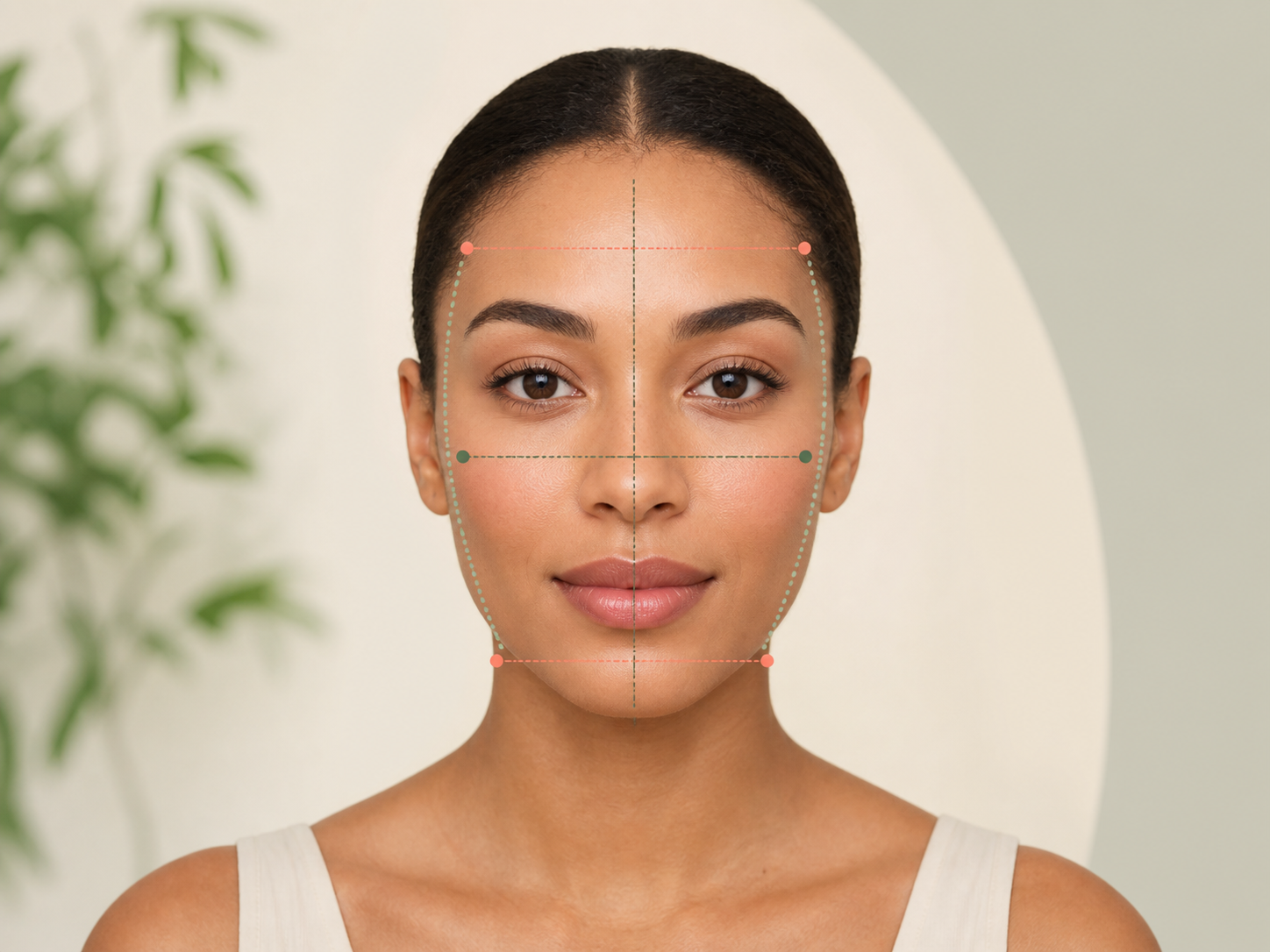
What Affects the Result
- Camera angle and head tilt
- Camera distance and lens distortion
- Uneven lighting
- Expression
- Hair and accessories
- Image editing and category definitions
Why Two Photos Can Produce Different Results
Perspective changes visible width and length, while smiles change cheek fullness and jaw visibility. Compare images taken at a similar distance, angle, and expression.
How We Test the Detector
A formal accuracy rate has not yet been established. We do not publish an unsupported percentage. The tool exposes the proportions used so you can review the reasoning and compare a second image.
What the Result Cannot Tell You
It cannot determine identity, health, ethnicity, personality, attractiveness, or a medically meaningful facial classification.
Improve Consistency
- Face the camera directly
- Use even light
- Show the entire outline
- Keep a neutral expression
- Avoid wide-angle close-ups
- Compare a second photo and manual measurements
Start with Your Own Proportions
Use a clear, front-facing photo for an explained result, or compare four manual measurements.